
Why Black History Month Had to Be Created: A Century of Memory, Labor, and Resistance
Why Black History Month Had to Be Created in the First Place
In 1926, Black history was not missing because it did not exist. It was missing because it was deliberately ignored.
Schools did not teach it. Textbooks erased it. Public memory shrank Black life down to margins, footnotes, or silence. What we now call Black History Month did not begin as a celebration. It began as a correction.
That correction was the life’s work of Carter G. Woodson, a historian who understood something deeply radical for his time: if a people are taught they have no history, they will be taught they have no future.
The Vision Behind Black History Week
When Woodson established Negro History Week in 1926, he was not asking for permission. He was building infrastructure. He believed history was not neutral. It was shaped by who was allowed to write it, teach it, and preserve it.
He chose February intentionally, aligning it with the birthdays of Abraham Lincoln and Frederick Douglass, dates already recognized in Black communities. He worked through schools, churches, and civic organizations, not elite institutions. This was history for the people, by the people, rooted in everyday life.
What later expanded into Black History Month was never meant to be confined to four weeks. It was meant to spark a lifelong practice of remembering.
Black History as Corrective Labor
Black history did not need to be invented.
It needed to be repaired.
The creation of Black History Week was a form of labor. Intellectual labor. Cultural labor. Emotional labor. It required researching what had been dismissed, documenting what had been stolen, and teaching what had been denied.
This labor extended far beyond Woodson. Teachers photocopied materials when textbooks failed. Parents passed down stories at kitchen tables. Churches printed programs that doubled as historical records. Families preserved photographs, letters, recipes, and oral histories because official archives would not.
Commemoration became a tool. Not for nostalgia, but for survival.
To remember Black history was to say:
We were here. We are here. We will not be erased.
Why Commemoration Is an Act of Resistance
To commemorate is to interrupt forgetting.
Black History Month exists because forgetting was policy. Erasure was strategy. Silence was enforced. Choosing to remember, publicly and collectively, became a form of resistance.
Every timeline, every name spoken aloud, every classroom lesson that told the truth disrupted a system that benefited from omission. Commemoration insisted that Black achievement was not accidental, and Black struggle was not the totality of Black existence.
It affirmed dignity in labor. Genius in ordinary lives. Beauty in continuity.
That is why Black History Month has always mattered, even when it feels routine, even when it is commercialized, even when people ask whether it is still necessary. It exists because the conditions that made it necessary have never fully disappeared.
A Century of Memory, Still Ongoing
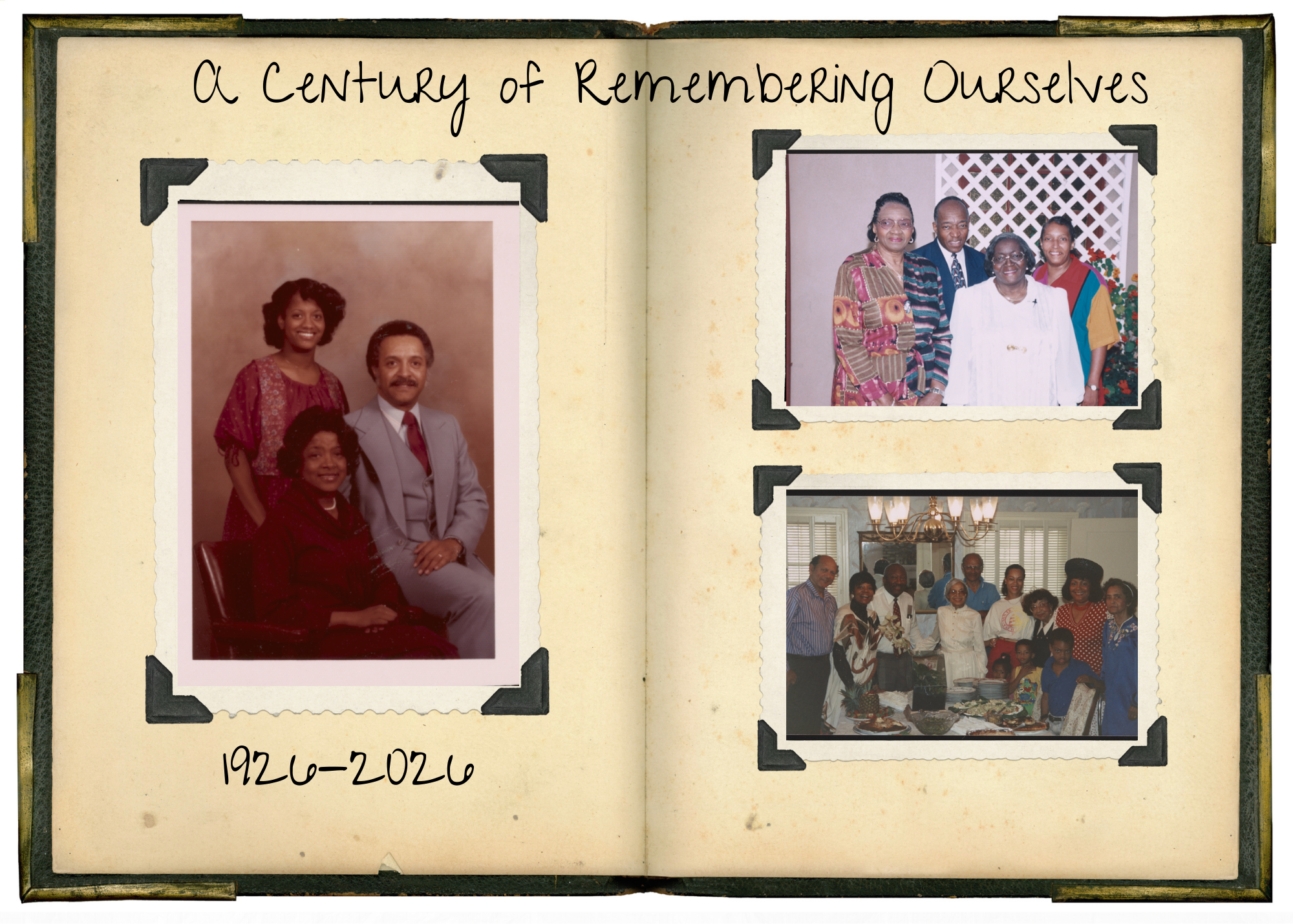
In 2026, we mark one hundred years since that first observance. A century of Black communities choosing to remember themselves on purpose.
This year’s theme, A Century of Black History Commemorations, invites us to look not only at what we remember, but how we remember. It asks us to honor the labor behind preservation and to recognize that commemoration itself has shaped identity, pride, and collective consciousness.
Black History Month is not a finished project. It is a relay. Each generation carries it forward in its own way.
Southern Geeky as Modern-Day Memory Keeping
Southern Geeky exists in that lineage.
It is not an archive in the traditional sense. It is a living record. A place where culture, memory, labor, and interior life are taken seriously. Where Black history is not reduced to dates and firsts, but understood as texture, feeling, and inheritance.
To write. To reflect. To tell stories that do not rush past complexity. These are modern forms of the same work Woodson began.
Memory keeping is still labor.
And it is still necessary.
Black History Month had to be created because silence was doing too much damage. One hundred years later, the work continues. Not because we are behind, but because remembering has always been an act of care.
And care, too, is resistance.
