
The Work That Built Us: Honoring Black Labor Across Generations
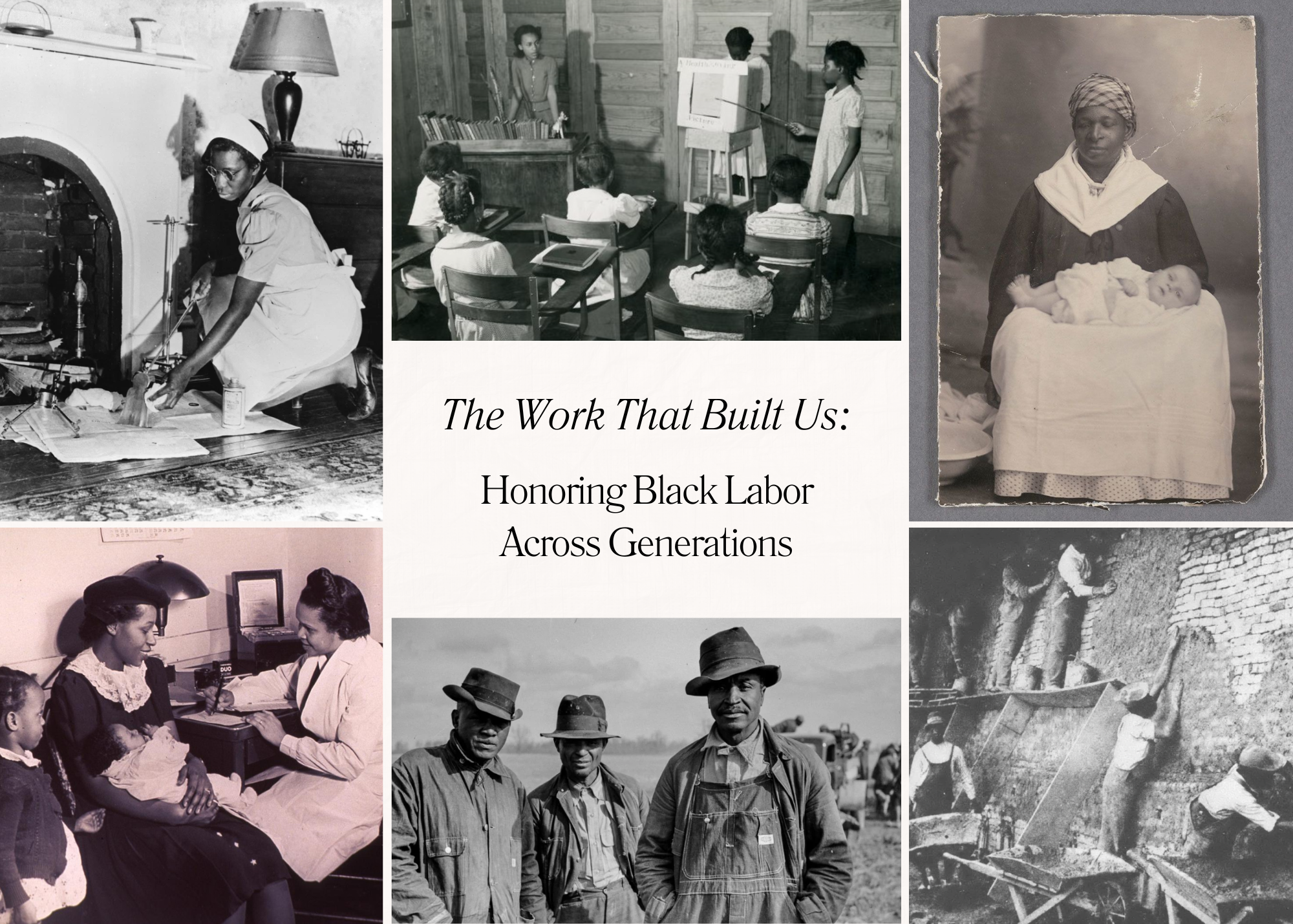
The Work That Built Us: Honoring Black Labor Across Generations
Black labor has always been more than survival. It has been skill, strategy, care, and inheritance.
Too often, when Black work is discussed, it is flattened into hardship alone. The language becomes heavy with struggle and light on respect. But Black labor has never been unskilled, invisible, or incidental. It built homes, communities, economies, and futures, often at the same time.
To honor Black labor is not to romanticize exploitation. It is to name the excellence that existed even when conditions were unjust, and to recognize how knowledge, discipline, and pride were passed from one generation to the next.
Domestic Labor Was Mastery
Domestic labor is often spoken about quietly, as if it should be hidden. But it required precision, endurance, and intelligence.
Black women ran households that were not their own while maintaining their own families with limited time and fewer resources. They cooked from memory and intuition. They cleaned with methods refined over decades. They organized schedules, managed children, and anticipated needs before they were spoken aloud.
This was not accidental competence.
It was mastery.
Domestic labor taught systems thinking, time management, emotional intelligence, and resilience. These skills did not disappear when work ended for the day. They came home. They shaped households, traditions, and the way care was given and received.
Skilled Trades Were Knowledge Systems
Black skilled tradespeople built with their hands and their minds.
Carpenters, bricklayers, mechanics, tailors, and craftspeople learned through apprenticeship, repetition, and community trust. Many were excluded from formal training institutions, so they created their own pathways to expertise.
These trades required mathematics, spatial awareness, problem-solving, and creativity. They built churches, schools, homes, and businesses that still stand today. In many Southern towns, Black tradespeople were the backbone of local infrastructure, even when their names were not recorded.
Skill was passed down quietly. A lesson here. A correction there. A child watching closely.
This was education, even when it was not called that.
Care Work Held Everything Together
Care work has always been central to Black life.
Midwives, nurses, caregivers, aunties, grandmothers, and neighbors carried medical knowledge long before systems acknowledged it. They knew when to intervene and when to wait. They understood bodies, emotions, and timing.
Care work is often described as instinct, but instinct is refined through experience. It is honed by responsibility. It is strengthened by love and accountability.
This labor sustained families through illness, grief, birth, and transition. It was not passive. It was active stewardship of life.
Teaching, Farming, and Service Work Built Futures
Black teachers taught more than curriculum. They taught self-worth, discipline, and possibility. Often under-resourced and overextended, they became counselors, advocates, and community leaders.
Black farmers worked land with generational knowledge, understanding seasons, soil, and survival. They cultivated food and independence in environments designed to limit both.
Service workers moved through spaces where they were expected to be unseen, yet they observed everything. They learned people. They learned systems. They learned how to endure and adapt.
Each role carried dignity. Each role required expertise. Each role mattered.
Labor as Legacy
Black labor has always been intergenerational.
Children learned by watching. By listening. By helping. By being trusted with responsibility early. Work was not just something you did. It was something you understood.
The value of labor was not measured solely by wages, but by what it allowed others to become. Education. Stability. Opportunity. Continuity.
This is why honoring Black labor matters. Not only because of what was endured, but because of what was built.
Remembering the Work That Built Us
To remember Black labor is to refuse erasure. It is to say that excellence existed even when recognition did not. That skill flourished even when opportunity was restricted.
At Southern Geeky, honoring Black labor means telling these stories with care. It means naming work as knowledge. It means understanding that memory itself is labor, and preservation is an act of respect.
The work that built us deserves to be spoken about clearly.
With dignity.
With pride.
Because it is still building us now.
